
Christmas at the YWCA: December 19, 1954
by Ed Busch, UU Lansing Church Archivist
As the First Universalist Church of Lansing congregation prepared for Christmas in 1954, it did so in a moment of transition, anticipation, and hope. The congregation gathered not yet in its new home, but at the Y.W.C.A. at 217 Townsend Street, where it had been meeting while final plans were underway to move into the newly purchased church building at 230 S. Holmes Street in January.
The world beyond Lansing was unsettled and fast-changing. National headlines reflected the tensions of the Cold War, the continuing shadow of the Korean War’s recent end, and a society balancing anxiety with postwar optimism. Television ownership was rapidly expanding, suburban development was reshaping American cities, and Americans were settling into patterns of prosperity mixed with unease. In Michigan, the auto industry continued to anchor the economy, while Lansing residents followed both state government developments and the steady growth of the city.
Against this backdrop, the December 19, 1954 Christmas service offered something quieter but no less significant: a reaffirmation of community, liberal faith, and shared responsibility.
Leadership and Setting
The congregation’s presence at the Y.W.C.A. reflected a season of transition. Having sold its North Washington Avenue church home earlier in the summer and secured a new building on South Holmes Street, the Universalists spent these months worshiping in temporary quarters while looking ahead to January and the opening of their new sanctuary.
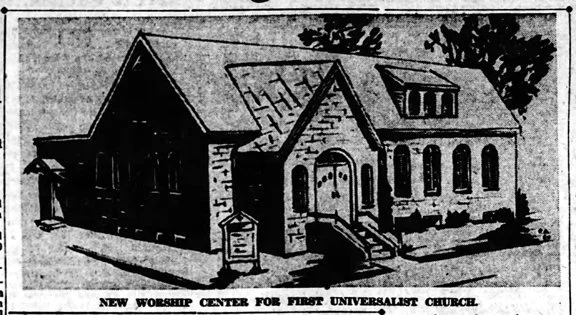
The new home for the First Universalist Church of Lansing. (Source: Lansing State Journal, Dec. 18, 1954, page 7)
The Rev. Morley R. Hartley served as minister, with Rev. Frank D. Adams and Rev. Helen F. Adams named ministers emeriti. Elizabeth Laidlaw was church president—our first woman to hold that role. The service was held at 11 a.m., with both worship and Church School gathering at the same hour.
The Lansing State Journal previewed the service the day before, noting that “special music and sermon will mark the Christmas service of the First Universalist church organization Sunday in the Y. W. C. A.” The article highlighted that the choir, accompanied by Mrs. Neil Carpenter at the piano, would sing “Bells of Gladness Ring” by Nolte, while Church School members would sing Christmas carols. Rev. Hartley’s sermon topic was identified as “The Spirit of Christmas in Our Church,” and the paper emphasized that “a special Christmas offering will be taken for the work of the church.”
A Broader Universalist Witness
On the very day of this Christmas service, church president Elizabeth S. Laidlaw was also lending a Universalist voice to the wider community through a guest editorial published in the Lansing State Journal. Writing about Clara Barton—Universalist, humanitarian, and founder of the American Red Cross—Laidlaw framed Barton’s life as one of “ever-widening and deepening service.” She reminded readers that Barton’s faith sustained her work and noted that Universalist women had carried that legacy forward through the Clara Barton camps for diabetic children. As Laidlaw wrote, “the dream of the Universalist women was to achieve the perfect type of service which would be in keeping with the ideals of Clara Barton,” a vision embodied in camps where children were taught not only medical skills, but confidence, cooperation, and hope. Appearing alongside news of the church’s Christmas worship, Laidlaw’s article echoed the same values expressed in the sanctuary: service rooted in liberal faith, practical compassion, and responsibility to the wider world.
The Order of Service
The Order of Service reflected both traditional Christmas elements and distinctly Universalist commitments. Music framed the morning, from the opening “Christmas Prelude” to hymns such as “Ring O Ring Ye Christmas Bells” and “Now Comes the Light.” Scripture from Luke, Henry Wadsworth Longfellow’s poem “Christmas Bells,” and a pastoral meditation all shaped the tone of reflection.
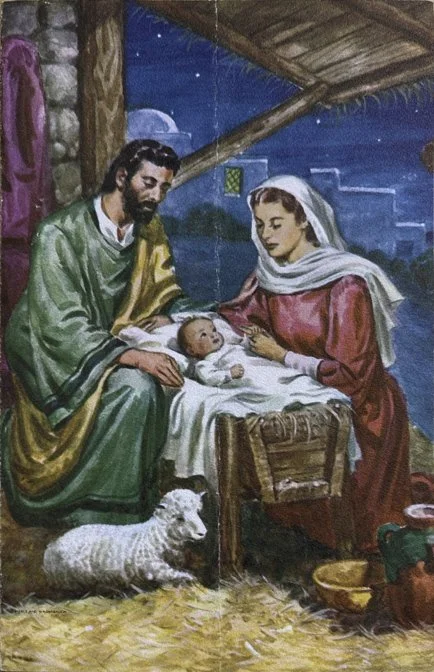
Cover of the Dec. 19, 1954 Order of Service.
One of the most telling moments came in the Affirmation of Faith, which reads:
We believe
In the authority of evidence:
In the supremacy of intelligence:
In the leadership of competence:
In the validity of freedom:
In the goal of commonwealth.
In a season often dominated by sentiment, this affirmation grounded Christmas in reason, freedom, and shared social purpose—values that continue to resonate in the life of the congregation.
A Special Christmas Offering
Unusually, the special Christmas offering that year was designated not for an outside charity but “for the treasury of the Church to be used at the discretion of the Board of Trustees.” The Order of Service makes clear both the urgency and the philosophy behind this choice:
“Our work is utterly dependent upon free-will offerings and, as we are a Liberal Church, we can hope for support only from those of the Liberal persuasion.”
The appeal continues with a statement that speaks directly to the congregation’s situation in late 1954:
“A GIVING CHURCH IS A LIVING CHURCH.”
This emphasis likely reflected the financial realities of purchasing the new Holmes Street building earlier that year and preparing it for use. The program went even further in connecting financial support to the future of religious education, under the striking heading “NO CHURCH, NO CHURCH SCHOOLS.” It cautioned:
“To support a Church School only is to run the risk of losing it. For if the Church should fail there would be no Church School.”
The message was unmistakable: sustaining the congregation itself was essential to sustaining everything else the church valued.
Community Life
The service also included announcements that paint a vivid picture of congregational life—congratulations on new births, expressions of sympathy, updates on members’ health, gratitude for donated dishes and glassware, and enthusiastic invitations to upcoming services, including the opening services in the new church home in January.
For the children, Christmas was made tangible and joyful. As the Lansing State Journal noted, the Church School held a Christmas program at the same hour, and “Santa Claus will distribute gifts to the children.”
Remembering Rev. Morley R. Hartley
In rereading this service, it is impossible not to pause over the presence of Rev. Morley R. Hartley. Just a few months after this Christmas gathering, Hartley’s ministry would end tragically with his untimely death. I explored his leadership, vision, and the difficult period surrounding it more fully in an earlier archives post, “On the Path to Merger: Lansing Universalists and Unitarians, October 1955.” Seen in that light, the December 1954 Christmas service carries added poignancy: it reflects Hartley’s emphasis on liberal religion grounded in reason, community responsibility, and active support for the church’s future.
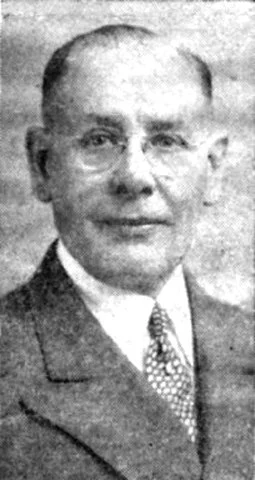
Rev. Hartley (Source: clipping, probably from LSJ)
Christmas on the Threshold
The December 19, 1954 Christmas service stands as a moment on the threshold: between old and new buildings, between uncertainty and hope, and—unbeknownst to those gathered—between one chapter of ministerial leadership and the next. Gathered at the YWCA, the congregation affirmed its beliefs, invested in its future, and celebrated Christmas not only as a holy day, but as a shared commitment to keep the church itself alive and thriving.
Why This Matters
Looking back at this service reminds us that congregational history is shaped not only by milestones like new buildings, but by the quieter choices made along the way—how a community understands its faith, supports its leaders, and sustains itself through generosity. The 1954 Christmas offering, the affirmation of liberal values, and the care taken to nurture both worship and Church School together speak to enduring questions we continue to face as a congregation today.
I’d Love to Hear From You
If you have memories, corrections, or stories connected to this week’s post—or if you simply enjoyed reading it—please feel free to email me. I’m always grateful for additions that help us preserve a fuller picture of UU Lansing’s history.
Email: uucgl.archives@gmail.com
Your comments truly help shape future posts.
About Me
I’m a member of the Unitarian Universalist Church of Greater Lansing and serve as the volunteer archivist for our congregation. I’m retired from Michigan State University, where I worked in digital preservation and archives. I enjoy uncovering stories from church newsletters, board records, and local history sources to help connect our past with the present.
I also serve on the UU Lansing Stewardship Team and help with Building and Grounds.
This piece was developed with research assistance and editorial support from ChatGPT.
Sources Cited
Order of Service, Christmas Sunday, First Universalist Church of Lansing, December 19, 1954. UU Lansing Archives.
Lansing State Journal, December 18, 1954, p. 6. Preview of Christmas services at First Universalist Church.
Lansing State Journal, December 19, 1954, p. 8. “Clara Barton and Diabetic Camps,” guest editorial by Elizabeth S. Laidlaw.
UU Lansing Archives Blog. “On the Path to Merger: Lansing Universalists and Unitarians, October 1955.”