
The April 18, 1967 issue of The Capitol Unitarian captures a week in the life of Unitarian Universalist Church of Greater Lansing —everyday life, thoughtfully recorded. There is no single major controversy or turning point highlighted here—no dramatic transition or congregational crisis. Instead, what we find is something quieter, and in its own way, just as meaningful: a glimpse into the rhythms of congregational life.
And what a full life it was.
Sunday worship that week featured a guest minister, Eugene Sparrow, whose background combined theological training at Harvard with work in community relations. Although ordained as a Unitarian minister, Sparrow spent much of his career in teaching and human relations work rather than in a settled congregation, including positions in cities such as Cincinnati and Grand Rapids. The congregation gathered at Kendon School in Lansing—a reminder that even a decade after the merger of the First Universalist Church of Lansing and the Unitarian Fellowship of East Lansing, the combined congregation was still in a period of transition.
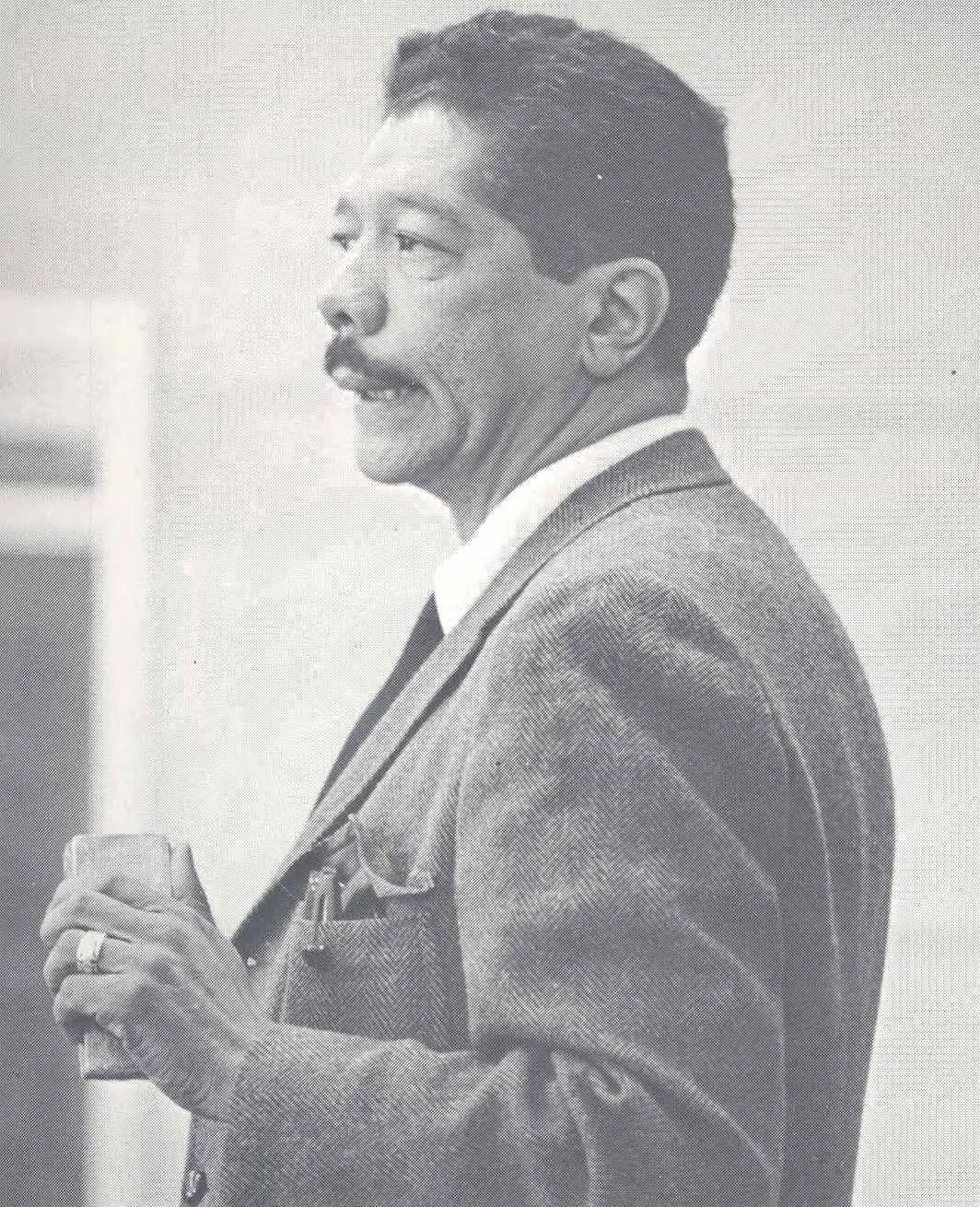
Dr. Eugene Sparrow (Link)
That transition had become especially tangible just the year before. In 1966, the congregation sold its previous church building in Lansing due to ongoing maintenance challenges. A new permanent home had not yet been secured, though one was on the horizon: in 1968, the congregation would purchase a church building on Grove Street in East Lansing. In April 1967, however, that future was not yet realized. The church existed fully—but without a building to call its own.
Beyond Sunday morning, the calendar tells the story of a busy and connected community. There were board meetings and nominating committee gatherings, all leading up to the upcoming Annual Meeting in early May, where members would consider and vote on a proposed revised constitution. Copies of the proposal were available at Kendon School for members to review.
But church life extended well beyond governance. Families and children were actively involved: younger students were preparing for a visit to the Michigan State University barns, while the junior high group planned a swim outing at the Lansing YWCA followed by dinner together. Social life for adults included circle dinners and a Mother’s Day gathering, while the women of the church looked ahead to a spring luncheon featuring a talk titled, “But Is It Art?”
There was also a strong intellectual and cultural current running through the congregation. Members were invited to attend lectures broadcast on WKAR, including a series on “The Winds of Change.” The Exploring Cinema Society offered opportunities to engage with film as both art and moral inquiry, including an upcoming showing of Children of Hiroshima, a powerful reflection on the human consequences of atomic war.
All of this was unfolding within a much larger and more turbulent world.
In April 1967, the Vietnam War was escalating, and within days of this newsletter, large anti-war demonstrations would take place in New York City and San Francisco. The civil rights movement continued to press forward, as debates over racial justice, economic inequality, and urban unrest shaped national conversation. Michigan itself was on the edge of a summer that would bring profound upheaval, with the Detroit uprising just a few months away in July.
Closer to home, Michigan State University was a growing hub of student activism and intellectual life—something reflected in the congregation’s engagement with campus lectures, films, and cultural events. Even in this seemingly routine newsletter, the threads of that wider world are visible.
And then, tucked into the second page, the tone shifts.
A short reflection, signed “T.L.S.” and written by Rev. Thomas L. Smith, describes a visit to a young man named Carl in the county jail. His story is one of addiction, repeated arrests, and uncertain prospects. But the piece does not dwell on the details as much as it raises questions—questions that have not gone away. Should addiction be treated as a crime or a public health issue? What responsibility does society bear? What does compassion require?
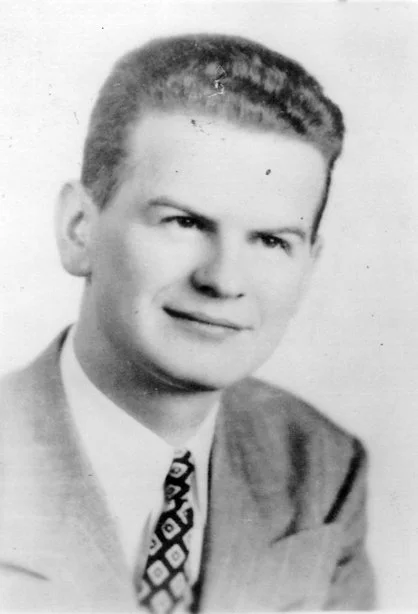
Rev. Thomas L. Smith (2007.0073)
Rev. Smith does not offer easy answers. Instead, the reflection ends with a series of open-ended questions, inviting the reader—and perhaps the congregation—to wrestle with them.
Even in an otherwise routine newsletter, the deeper concerns of the time find their way to the surface.
That juxtaposition may be the most revealing part of this issue. In one column, we see the ordinary rhythms of congregational life: meetings, meals, classes, and community events. In another, we encounter the enduring ethical questions that challenge both individuals and institutions.
Nearly sixty years later, much has changed—including additional moves and new spaces in the years since. But the balance remains familiar: a community grounded in shared activities and relationships, yet continually drawn into larger questions about justice, compassion, and human dignity.
Seeking Your Input
While only a small number of current congregants were part of the church in the late 1960s, your memories—and the memories passed down through families—remain an important part of this history. What do you know about everyday church life during this period? Are there stories, photos, or materials that help bring these years to life?
If you have something to share, we would love to hear from you. Please contact the archives team at uucgl.archives@gmail.com.
Acknowledgment
This post was researched and written by Ed Busch. AI writing assistants — Claude and ChatGPT — were used to help organize and refine the presentation of archival content. The research, archival work, and interpretive judgments are his own.