
Opening the Doors: Archives, Community Memory, and the Stories We Carry Forward
by Ed Busch, UU Lansing Archivist
When most people imagine an archive, they picture quiet rows of shelves, carefully labeled boxes, and a room where little seems to change. And in some ways, that picture is accurate — archives often look the same from the outside. But the real treasures aren’t on display. They’re tucked inside folders and boxes, waiting to be discovered through something called a finding aid — the map that helps us uncover the stories of our congregation’s past.
On Sunday, February 22, as our community gathers to celebrate the completion of the 100 Wing with an open house, visitors will have an opportunity to peek behind the scenes at the archives space — a place where decades of UU Lansing history are preserved. I’ll be on hand to greet visitors, answer questions, and help connect the dots between the physical space and the living stories it holds.
(One practical note: food and drink are not permitted in the archives — preserving history requires a little extra care.)
While the shelves themselves may not look dramatic, each box represents moments of shared purpose: worship services, justice work, building dreams, and acts of generosity that shaped our congregation. Looking through these records reminds us that our current projects — including the move to our South Pennsylvania campus — stand on foundations built by members who came before us.
If you’d like more background on our archives and what can be found there, you may enjoy my earlier post from October 2024 exploring the archives and the stories they hold.
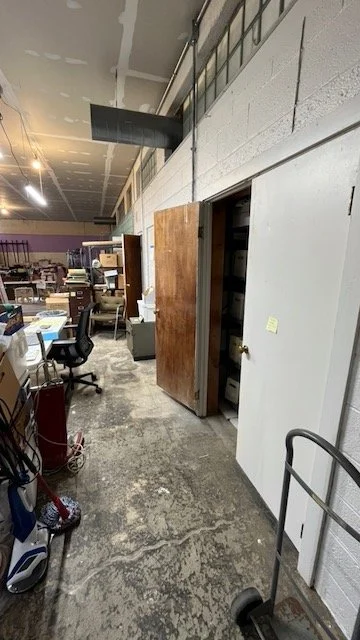
The UU Lansing archives space before the West Wing project, circa 2024.
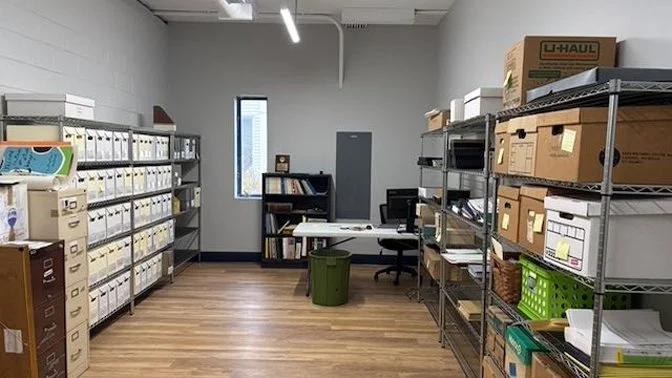
The UU Lansing Archives in 2026.
Supporting One Another: Chalice Lighters and Shared UU Values
As I’ve been preparing for this open house, I’ve also been revisiting records that tell another story — how UU Lansing both gives and receives support within the wider Unitarian Universalist community.
One example is the Chalice Lighters Program, an initiative of the MidAmerica Region that helps fund congregational growth, new spaces, and outreach efforts across the region. Past newsletters show that UU Lansing has benefited from this program in tangible ways. A March 2014 weekly digest email highlighted the installation of hearing loop systems — originally in our Grove Street building and later transferred to our South Pennsylvania Sanctuary and Chapin Room — technology made possible through a Chalice Lighters grant that improved accessibility for members and visitors.
The impact of that grant appears not only in meeting minutes and newsletters but also in member voices. In a December 24, 2014 Weekly Digest email, Carol Ingall wrote, “I so appreciate the hearing loop in the church’s Assembly Hall; it works very well with my hearing aids. Thank you, thank you!” Moments like this remind us that accessibility improvements become real through the experiences of people in our community.
A few years later, in 2020, the congregation celebrated another milestone when a Chalice Lighters grant helped support our Natural Play Space project. The newsletter described the space as an inviting and nurturing oasis for both the congregation and the surrounding community, adding thousands of dollars toward the project and helping bring the vision to life. Together, these examples show how shared giving across congregations becomes real, visible change at the local level.
The purpose of the Chalice Lighters Program is to support the growth of UU congregations throughout the region. Grants help fund new congregation starts, additional professional staff, new or enhanced space, and improved outreach or public relations programs. The program is supported by UUs like us who choose to give back to the greater UU community so that other congregations — and sometimes our own — can grow and thrive. Contributors, known as “Chalice Lighters,” donate modest amounts each year that collectively make these grants possible.
Looking back through the archives makes clear how important this spirit of mutual support has been to our congregation. It is always a good time to pay it forward, acknowledging past support and helping make future grants possible.
If you’d like to learn more or become a Chalice Lighter, visit the MidAmerica Region’s Chalice Lighters page:
https://www.uua.org/midamerica/giving/chalice-lighters.
A Longer Tradition of Service: The UUSC Connection
Our archives also trace a long relationship with the Unitarian Universalist Service Committee (UUSC), whose roots reach back to 1940, when Unitarians organized to support refugees during World War II.
Through programs like Guest at Your Table — which many longtime members may remember as small cardboard boxes placed on family dining tables — UU Lansing families contributed to global justice efforts for decades. Records suggest our participation reaches back at least to the late 1970s, with earlier newsletters documenting support through holiday card sales and other fundraising efforts.
Records in the archives include tangible reminders of this long commitment. One example is a receipt from 1995 showing our congregation raising $162.64 through Guest at Your Table — a modest amount by today’s standards, but a meaningful symbol of steady, everyday generosity that connects us to global justice work across decades.
A 2014 newsletter encouraged members to host Guest at Your Table dinners during the autumn season, describing them as opportunities to raise awareness and funds for human rights work around the world. In recent years, our congregation has continued this tradition through Special Plate Collections supporting UUSC’s work.
Learn more about the UUSC and its current work here:
https://www.uusc.org/
These pieces of history remind us that our congregation has long understood itself as part of something larger — a network of communities working together for compassion and justice.
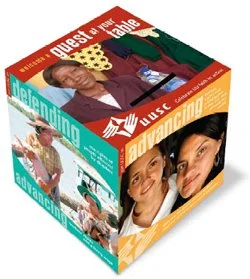
Guest At Your Table collection box. (Source: https://youthedigitalcreator.blogspot.com/)
Why This Matters Now
As we celebrate new spaces and future possibilities, it’s worth noting another meaningful milestone: this Friday, February 20 — the day this post appears in the weekly newsletter — marks the anniversary of the congregation’s 2015 vote to purchase our South Pennsylvania campus. That decision shaped much of the growth and change we continue to experience today.
The archives offer a grounding perspective: every expansion, every program, and every partnership becomes part of a longer story. The open house isn’t just about new rooms — it’s about seeing ourselves as caretakers of a living legacy.
If archives preserve the past, open houses celebrate the future — and on February 22, we get to experience both at once.
Share Your Memories
If you have photographs, documents, or memories connected to the early years of the Unitarian Universalist Church of Greater Lansing — including our involvement in Chalice Lighters and the UUSC — the archives would love to hear from you.
We are especially interested in any photographs of the exhibit or of related services and events. Personal recollections and images help bring these newsletters and names to life for today’s congregation.
You can share materials or comments by emailing uucgl.archives@gmail.com.
About Me
I’m a member of the Unitarian Universalist Church of Greater Lansing and serve as the volunteer archivist for our congregation. I’m retired from Michigan State University, where I worked in digital preservation and archives. I enjoy uncovering stories from church newsletters, board records, and local history sources to help connect our past with the present.
I also serve on the UU Lansing Stewardship Team and help with Building and Grounds.
Sources
UU Lansing Weekly News email, September 4, 2020
UU Lansing Weekly Digest email, March 26, 2014
UU Lansing Weekly Digest email, December 24, 2014
UU Lansing church newsletters (scanned)
Religious Eedcuation records, UU Lansing Collection (C4)
This piece was developed with research assistance and editorial support from ChatGPT.